This study follows eight undergraduate students, their instructor, and GenAI as they developed public-art proposals for a university concert hall over one semester. Analysis of design artifacts, recorded events, teacher comments, surveys, and interviews traces how ideas entered, changed, or disappeared from two teams’ design trajectories. GenAI helped students externalize possibilities quickly, but its outputs became meaningful only through human decisions about adoption, revision, site fit, construction logic, and physical feasibility. Students and the teacher continued to set direction and judge quality, while polished AI outputs often created additional work of comparison, repair, and verification. The findings frame human–AI design as conditional epistemic participation rather than automatic collaboration.
Original Figures
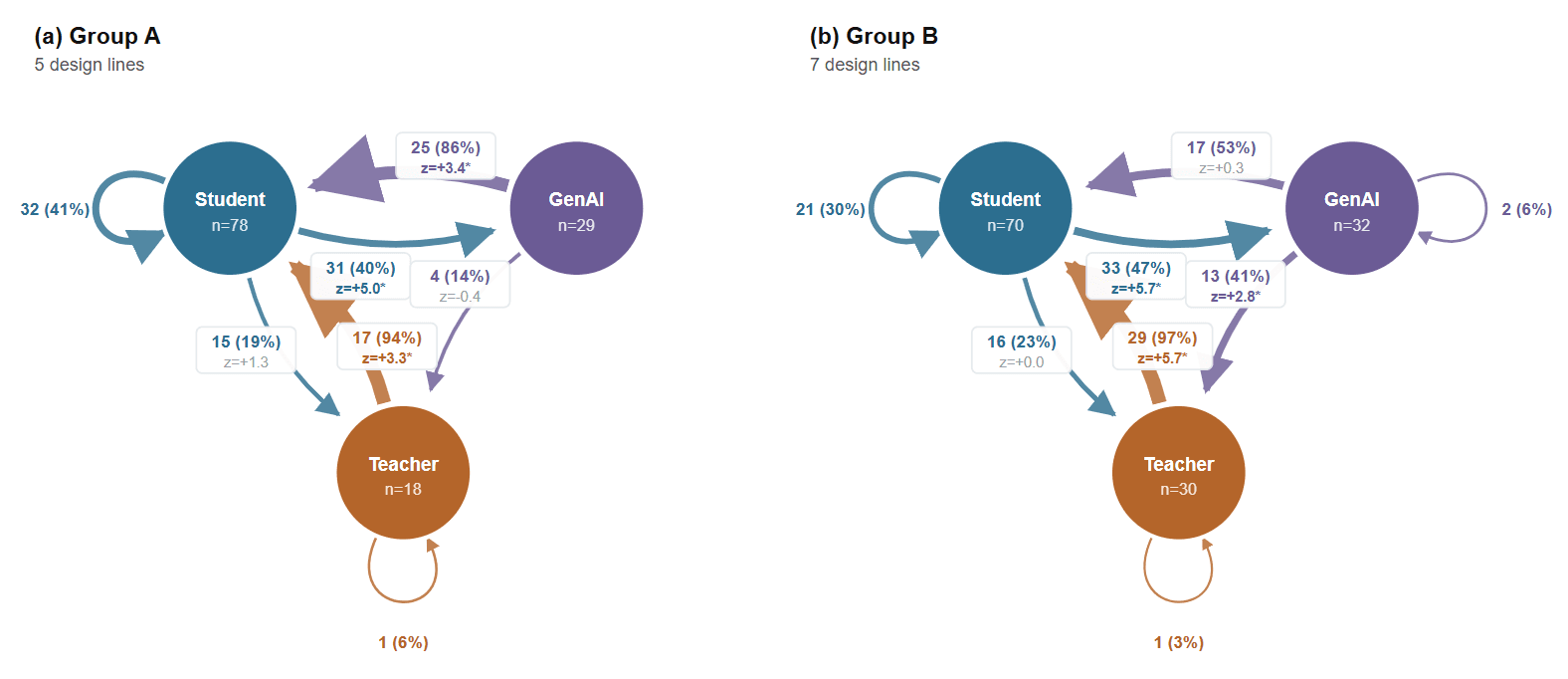
These interaction maps compare how design moves circulated among students, GenAI, and the instructor in Group A and Group B. Across both teams, students remained the main source of design activity, while GenAI and teacher inputs entered selectively and were revised through human judgment.
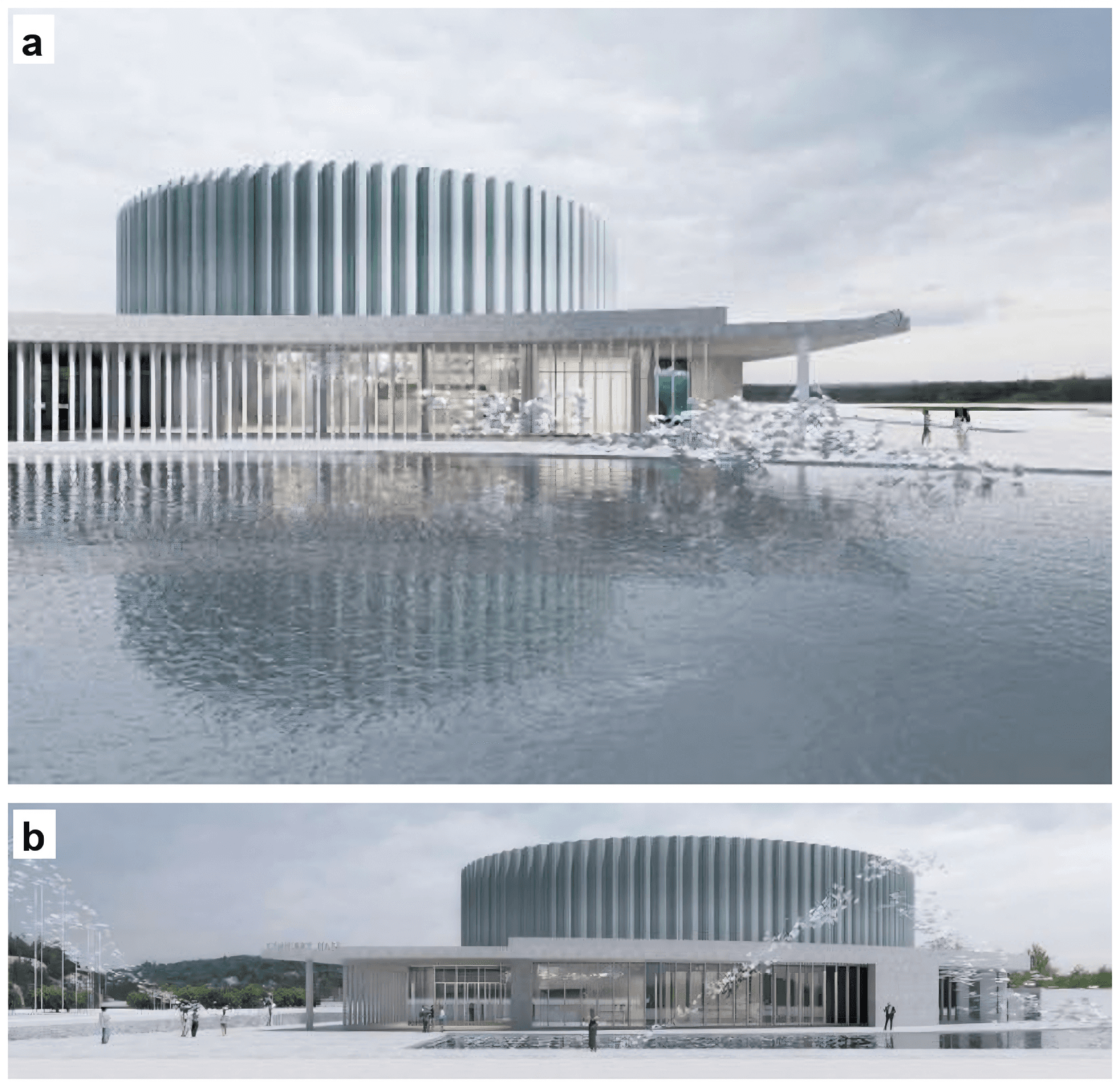
Two exterior views show how a proposed water feature was integrated into the concert-hall site. The comparison highlights its development from a visual addition into an element that helps organize the surrounding public space.
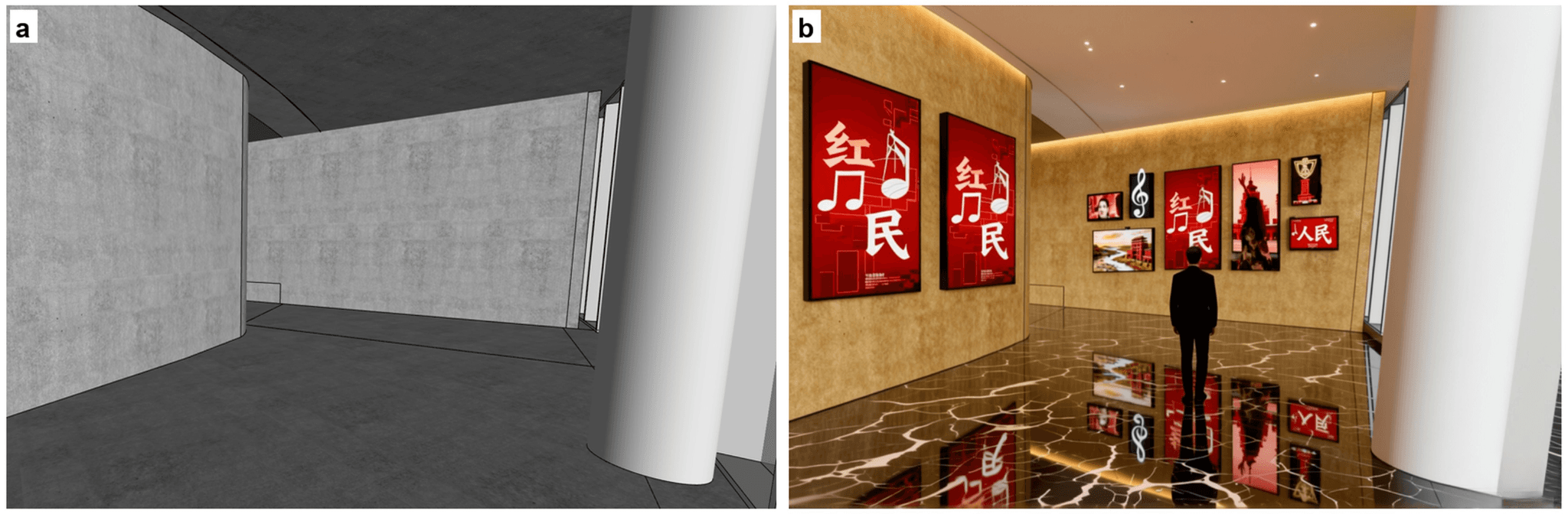
The left panel shows the student-supplied spatial shell, and the right panel shows an AI-generated light-box proposal. The proposal was rejected during critique, illustrating that a polished output did not automatically become part of the final design.
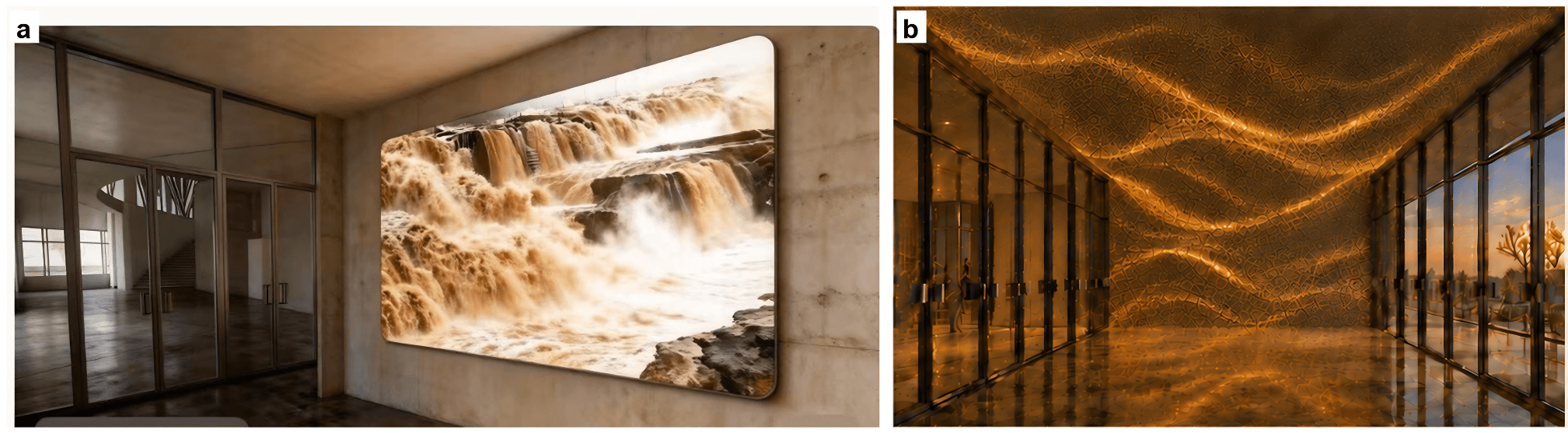
The pair shows a shift from a literal waterfall image to an abstract, immersive light-and-particle environment. It demonstrates how the team reworked AI imagery to better support the intended spatial experience.