Creativity in GenAI-Supported Arts Education
Abstract
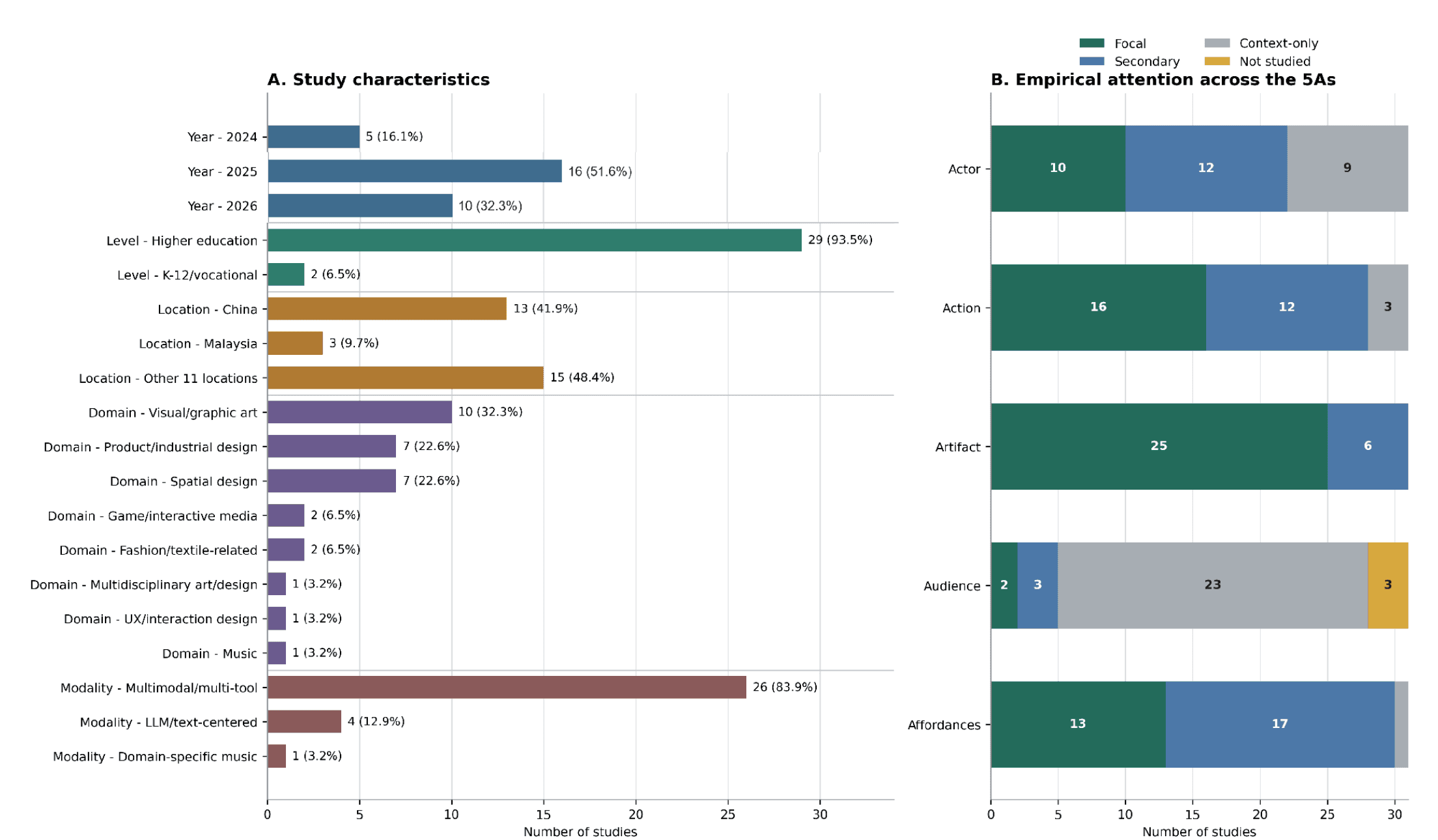
This systematic review examines how creativity has been conceptualized and evaluated in 31 empirical studies of GenAI-supported arts education. Using the 5A framework—Actor, Action, Artifact, Audience, and Affordances—it maps where current research places its attention and what remains underexplored. The literature most often evaluates finished artifacts, while audience interpretation and learners’ creative agency receive less sustained attention. Across studies, GenAI more consistently supports participation, rapid iteration, and expressive fluency than originality or conceptual depth. The review argues that creativity should be assessed not only through what learners produce, but also through how they establish intentions, make disciplinary judgments, transform generated material, and explain their decisions.
Original Figures