Engagement and Emerging AI Researcher Identities
Abstract
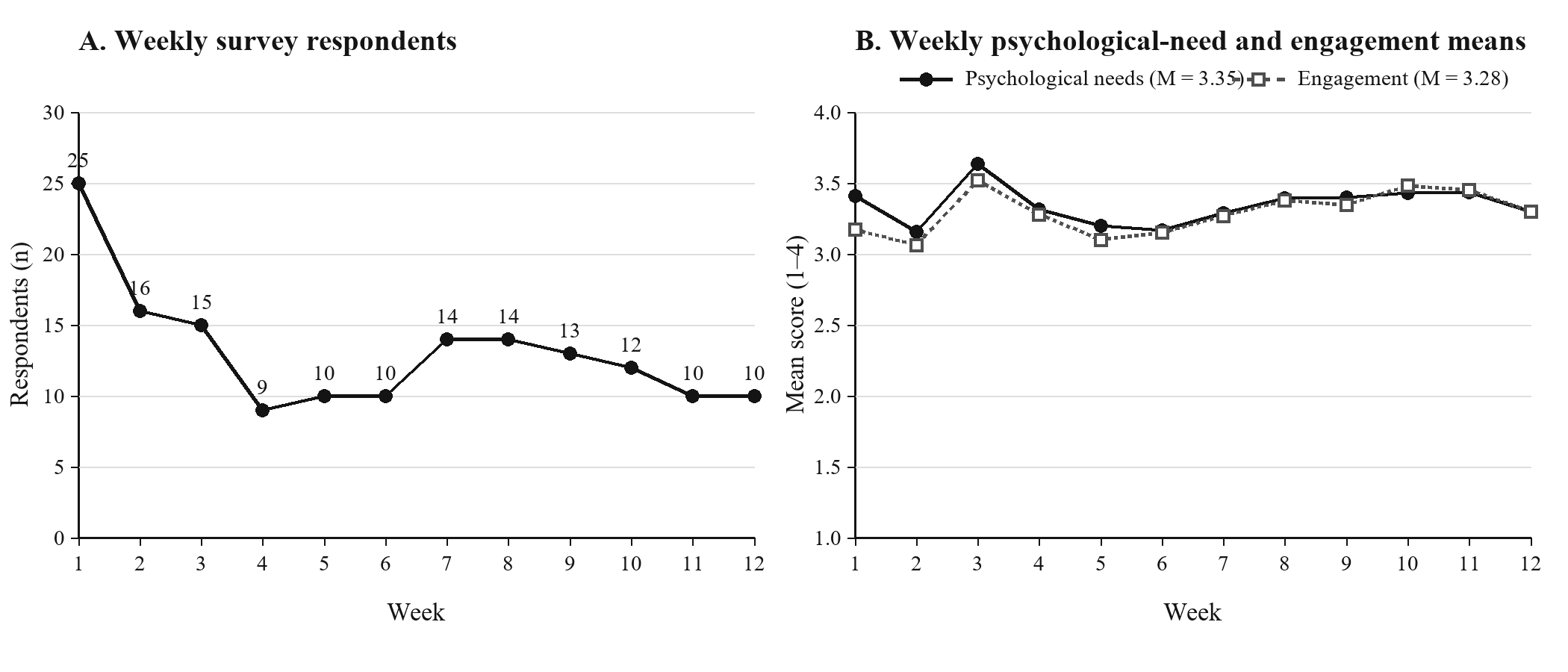
This study investigates how the design of a voluntary university AI-in-Education lab shaped members’ engagement and emerging researcher identities. Twenty-six members contributed 158 weekly survey responses, and eight participated in exit interviews. Experiences of autonomy, competence, relatedness, responsive peers, accessible mentors, low-pressure leadership, and recognition were positively associated with engagement, while individual activities or information resources showed less consistent relationships after statistical correction. Interviews revealed multiple identity trajectories: some members moved from seeing themselves as AI users toward designers or researchers, while others maintained practitioner or critical orientations. The findings suggest that participation structures and relationships—not simply access to technical activities—shape whether learners engage and how they understand their contribution to AI research.
Original Figures