This study examines how high-school students co-regulated engineering design with a GenAI-integrated CAD environment while designing a house toward net-zero annual energy use. Analysis of 250 prompt iterations from 32 students identified two exploratory learner profiles. Technical Builders retained technical goal setting while delegating execution, whereas Aspirational Stylists more often described desired outcomes and delegated monitoring or content generation. Goal setting remained student-led in both profiles, but the groups differed in their attention to site, layout, building systems, and energy systems. Although the sample’s average conceptual-knowledge score increased from pre- to post-test, gains did not differ significantly between profiles. The profiles describe patterns of responsibility within this setting rather than fixed learner abilities or identities.
Original Figures
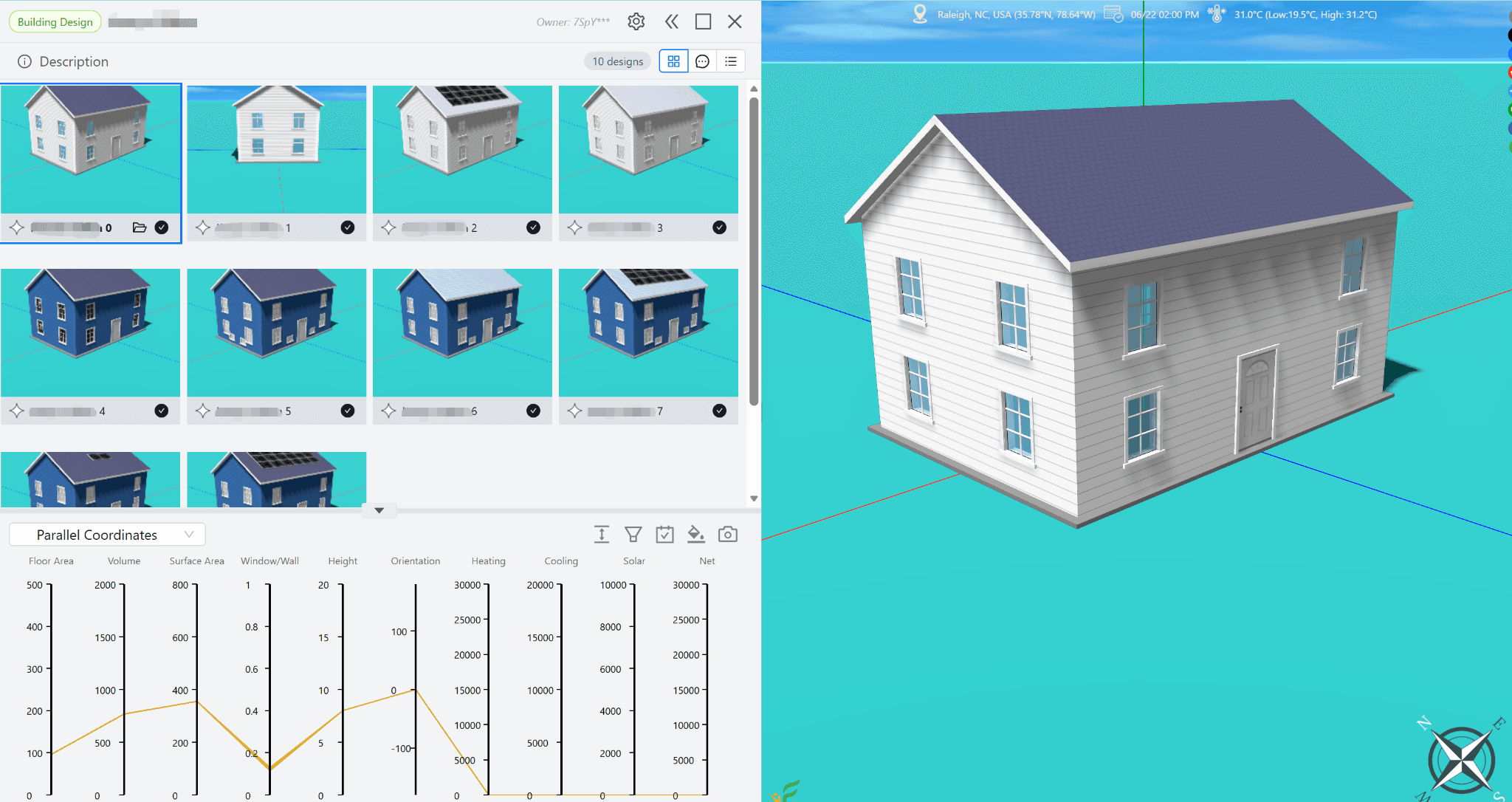
The anonymized GenAI-integrated CAD environment combines a design gallery and performance panel with a live 3D editing view. Students could compare iterations while monitoring architectural and energy-related parameters.
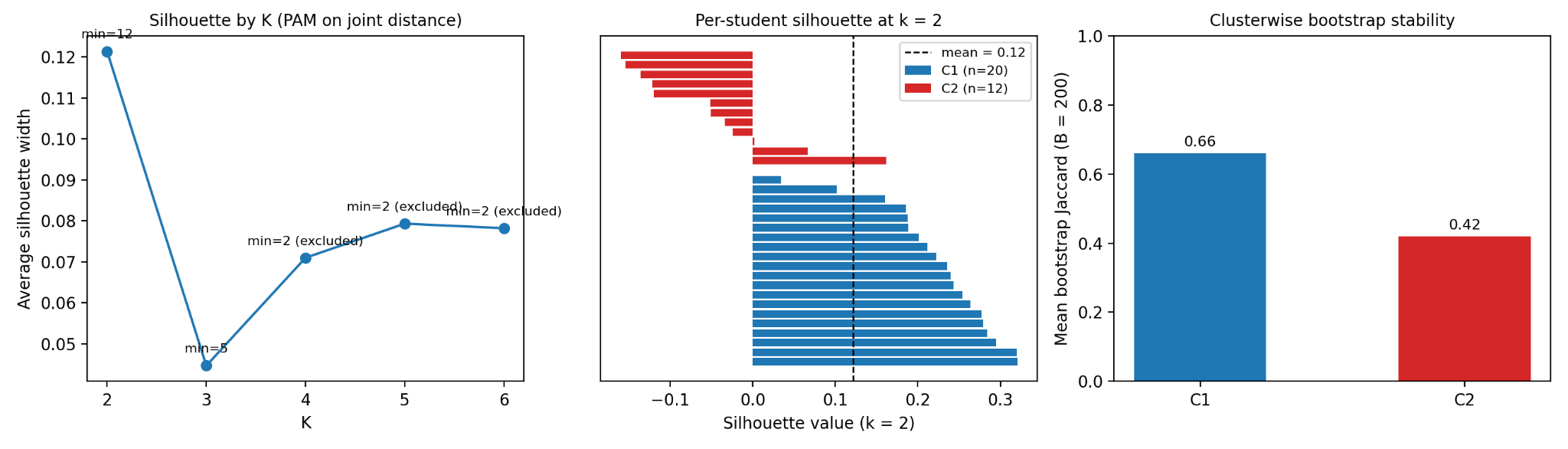
These PAM diagnostics compare silhouette width, individual silhouette values, and bootstrap stability for the two learner profiles. They show modest separation and lower stability for the smaller cluster, supporting a cautious interpretation of the profiles.
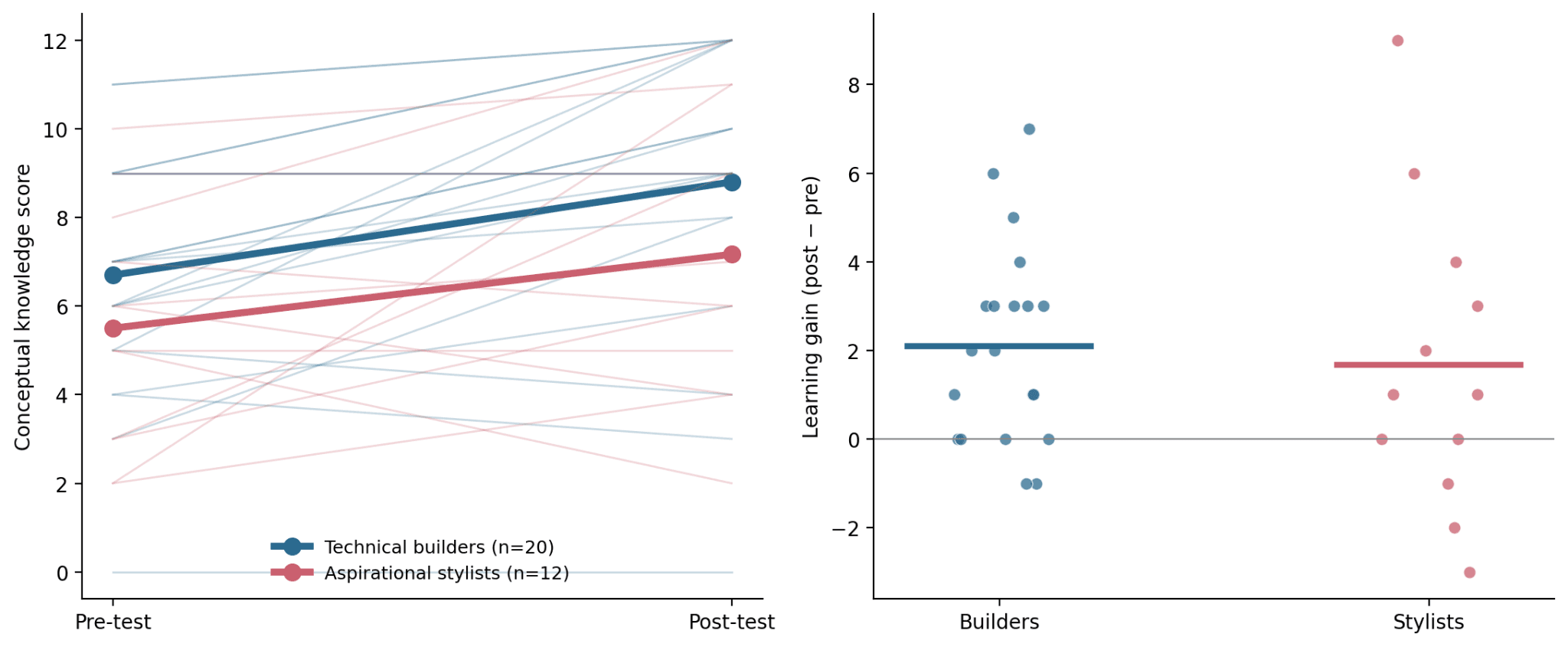
Individual and average pre/post trajectories show conceptual-knowledge development for Technical Builders and Aspirational Stylists. Both profiles improved on average, but their gains did not differ significantly from one another.
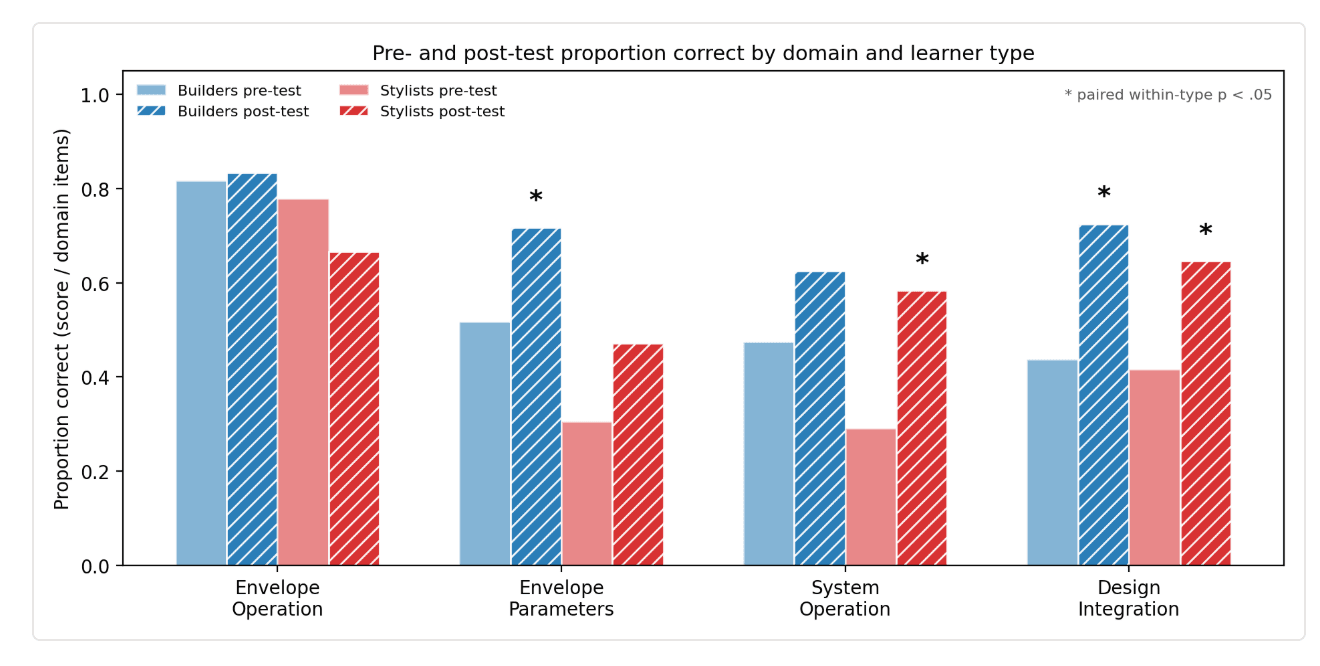
This domain-level comparison breaks pre/post performance into envelope operation, envelope parameters, system operation, and design integration. The marked changes show that knowledge development varied by domain and learner profile rather than improving uniformly.